
- Your cart is empty
- Continue Shopping
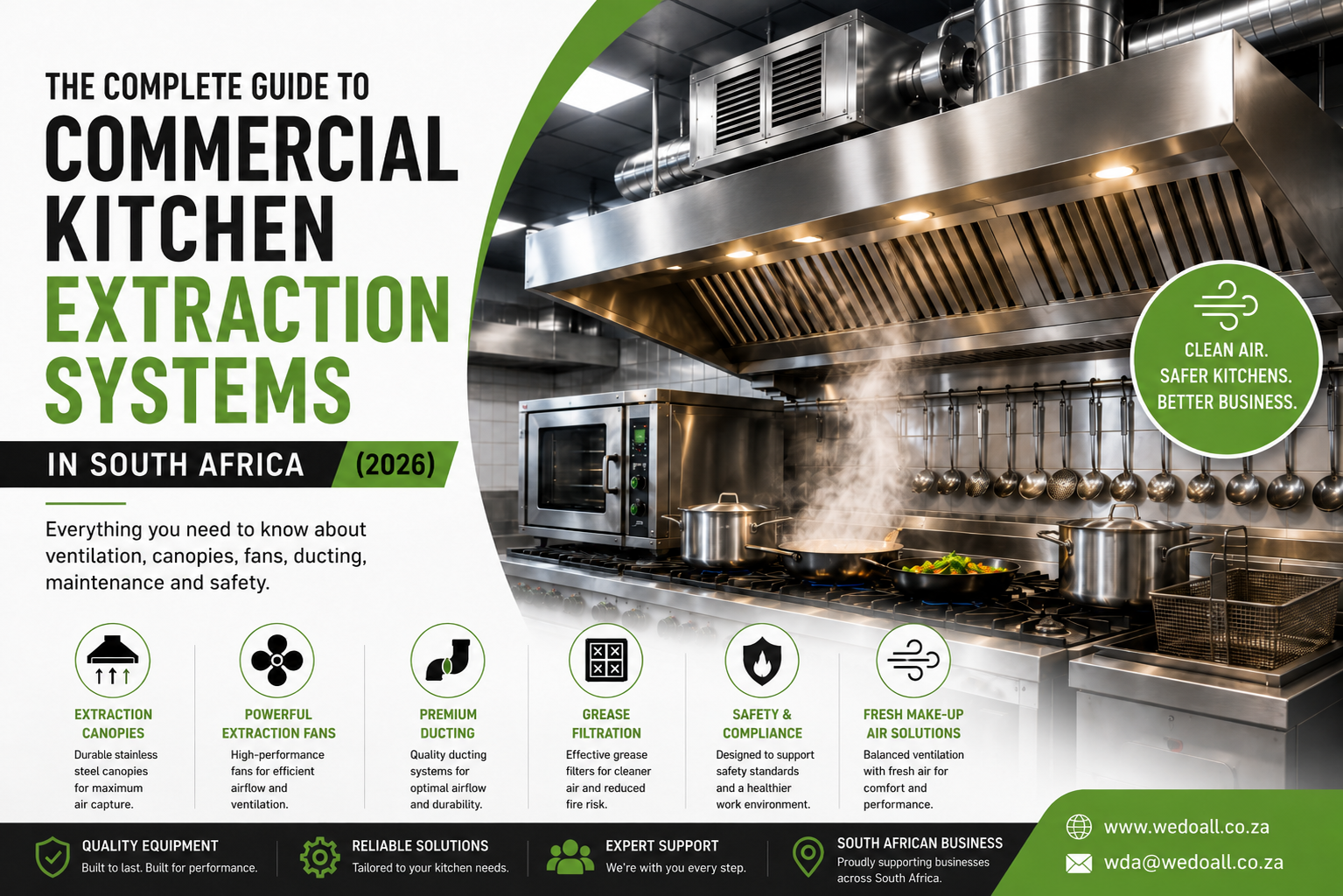
Extraction Systems
Commercial Kitchen Extraction Systems in South Africa | Complete Guide
-
By Khabo
- Posted on
- 0 comments
The Complete Guide to Commercial Kitchen Extraction Systems in South Africa (2026)
Running a successful commercial kitchen is about much more than preparing exceptional food. Behind every efficient restaurant, hotel, bakery, takeaway, supermarket deli, butcher, or catering business is an extraction system that works tirelessly to remove heat, smoke, grease, steam, and cooking odours from the kitchen environment.
Without proper ventilation, even the most modern commercial kitchen can quickly become uncomfortable, unsafe, and less productive. Excessive heat can affect staff performance, grease particles can accumulate inside ducting and equipment, and poor airflow can compromise food quality, hygiene, and overall workplace safety.
A professionally designed commercial kitchen extraction system creates a cleaner, healthier, and more efficient working environment. It improves air quality, helps protect expensive kitchen equipment, supports compliance with safety standards, and provides a more comfortable experience for employees and customers alike.
Whether you’re opening a new restaurant, upgrading an existing kitchen, or planning a large-scale commercial food operation, choosing the right extraction system is one of the most important investments you will make. The right solution depends on several factors, including your kitchen layout, cooking equipment, menu, daily output, and ventilation requirements.
In this comprehensive guide, we’ll explain everything you need to know about commercial kitchen extraction systems in South Africa—from how they work and the different types available to installation considerations, maintenance best practices, and expert tips for selecting the ideal solution for your business.
Table of Contents
- What Is a Commercial Kitchen Extraction System?
- Why Commercial Kitchens Need Extraction Systems
- How Commercial Kitchen Extraction Systems Work
- Main Components of an Extraction System
- Types of Commercial Kitchen Extraction Systems
- Choosing the Right Extraction Canopy
- Wall Canopy vs Island Canopy Comparison
- Understanding Airflow and Extraction Capacity
- Fresh Air and Make-Up Air Systems
- Fire Safety and Grease Management
- Industries That Require Extraction Systems
- South African Regulations and Best Practices
- Common Mistakes to Avoid
- Installation Process
- Maintenance and Cleaning
- Signs It’s Time to Upgrade Your Extraction System
- Frequently Asked Questions
- Why Choose Wedoall
- Final Thoughts
What Is a Commercial Kitchen Extraction System?
A commercial kitchen extraction system is a specialised ventilation system designed to remove airborne contaminants generated during cooking. These contaminants include smoke, grease particles, steam, excessive heat, cooking fumes, and odours that naturally build up in busy commercial kitchens.
Unlike domestic extractor fans, commercial extraction systems are engineered to handle the demands of high-volume cooking. They continuously draw contaminated air through an extraction canopy, filter out grease particles, and safely expel the air outside the building through a network of ducting and powerful extraction fans.
Depending on the kitchen’s requirements, some systems also introduce fresh replacement air—known as make-up air—to maintain balanced airflow and prevent negative air pressure. This helps improve staff comfort, ensures cooking equipment performs efficiently, and supports a healthier working environment.
Commercial extraction systems are commonly installed in:
- Restaurants
- Hotels
- Cafés
- Fast food outlets
- Bakeries
- Butcheries
- School and university kitchens
- Hospital kitchens
- Supermarket delis
- Catering companies
- Food manufacturing facilities
- Cloud kitchens and ghost kitchens
No matter the size of the operation, an extraction system plays a vital role in maintaining air quality, reducing fire risks, and creating a safe, productive kitchen.
Why Every Commercial Kitchen Needs an Extraction System
A commercial kitchen generates far more than delicious meals. Every day, cooking equipment such as fryers, grills, ovens, charbroilers, gas ranges, and woks produce large amounts of heat, grease, moisture, and smoke. Without effective extraction, these contaminants quickly accumulate, affecting both the kitchen environment and the people working in it.
Here are some of the key benefits of installing a high-quality commercial kitchen extraction system:
1. Improves Air Quality
Extraction systems continuously remove smoke, fumes, grease particles, and airborne contaminants, creating a cleaner and healthier workspace. Better air quality can reduce discomfort for staff and contribute to a more pleasant environment throughout the premises.
2. Enhances Staff Comfort and Productivity
Commercial kitchens can become extremely hot during busy service periods. Efficient extraction helps remove excess heat and improve airflow, making the workspace more comfortable. Comfortable staff are generally able to work more efficiently, especially during long shifts.
3. Reduces Fire Risks
Grease vapours can settle inside ducting, filters, and extraction canopies over time. If not properly managed, grease build-up can increase the risk of fire. A well-designed extraction system, combined with regular cleaning and maintenance, helps minimise this hazard.
4. Protects Kitchen Equipment
Heat, grease, and moisture can shorten the lifespan of commercial kitchen equipment. Effective ventilation helps reduce the accumulation of contaminants on appliances, contributing to cleaner operating conditions and potentially lowering maintenance requirements.
5. Creates a Better Customer Experience
Smoke and cooking odours drifting into dining areas can negatively affect guests. Proper extraction helps keep front-of-house areas fresher and more comfortable, enhancing the overall dining experience.
6. Supports Food Hygiene
Excessive moisture and grease can encourage unhygienic conditions if left unchecked. Good ventilation helps maintain a cleaner kitchen environment, making it easier to uphold high food safety and hygiene standards.
7. Supports Compliance
Commercial kitchens are generally expected to meet health, safety, and fire protection requirements. While specific obligations vary depending on the premises and local regulations, a professionally designed extraction system is an important part of operating a safe commercial kitchen.
How Commercial Kitchen Extraction Systems Work
Although a commercial kitchen extraction system may appear simple from the outside, it is actually a carefully engineered ventilation solution designed to remove contaminated air while maintaining a comfortable and safe working environment.
Every time food is grilled, fried, baked, or cooked over an open flame, airborne contaminants such as smoke, grease particles, steam, heat, and cooking odours are released into the kitchen. If these pollutants are not removed efficiently, they can affect staff comfort, reduce visibility, create unpleasant working conditions, and increase the accumulation of grease throughout the kitchen.
A commercial extraction system captures these contaminants directly above the cooking equipment before they have an opportunity to spread.
The process typically works as follows:
Step 1: Capturing Contaminated Air
The extraction canopy, positioned directly above cooking appliances, captures rising heat, smoke, grease vapours, steam, and airborne particles.
The design of the canopy plays a crucial role in ensuring contaminants are collected efficiently before they disperse throughout the kitchen.
Step 2: Grease Filtration
Before the air enters the ducting system, it passes through specialised grease filters.
These filters are designed to trap grease particles while allowing airflow to continue through the system. Removing grease at this stage helps:
- Reduce grease build-up inside ductwork
- Improve airflow efficiency
- Lower cleaning requirements
- Reduce fire risks
Regular cleaning of grease filters is essential to maintain optimal system performance.
Step 3: Air Movement Through Ducting
Once filtered, the contaminated air travels through a network of stainless steel or galvanised steel ducting.
The ducting is carefully sized to maintain efficient airflow while minimising resistance and noise.
Poorly designed ductwork can reduce extraction efficiency, increase energy consumption, and shorten the lifespan of extraction fans.
Step 4: Extraction Fan Removes the Air
The extraction fan acts as the engine of the entire system.
Powerful commercial extractor fans create negative pressure that continuously pulls contaminated air through the canopy and ductwork before discharging it safely outside the building.
The fan must be correctly matched to the kitchen’s airflow requirements. An undersized fan may struggle to remove smoke and heat effectively, while an oversized fan can waste energy and create unnecessary operating costs.
Step 5: Fresh Air Replacement (Make-Up Air)
As contaminated air leaves the kitchen, fresh air should replace the extracted air.
This is known as make-up air.
Without make-up air, the kitchen can experience negative air pressure, making doors difficult to open, affecting gas appliance performance, and reducing extraction efficiency.
Balanced ventilation creates a healthier, cooler, and more comfortable working environment.
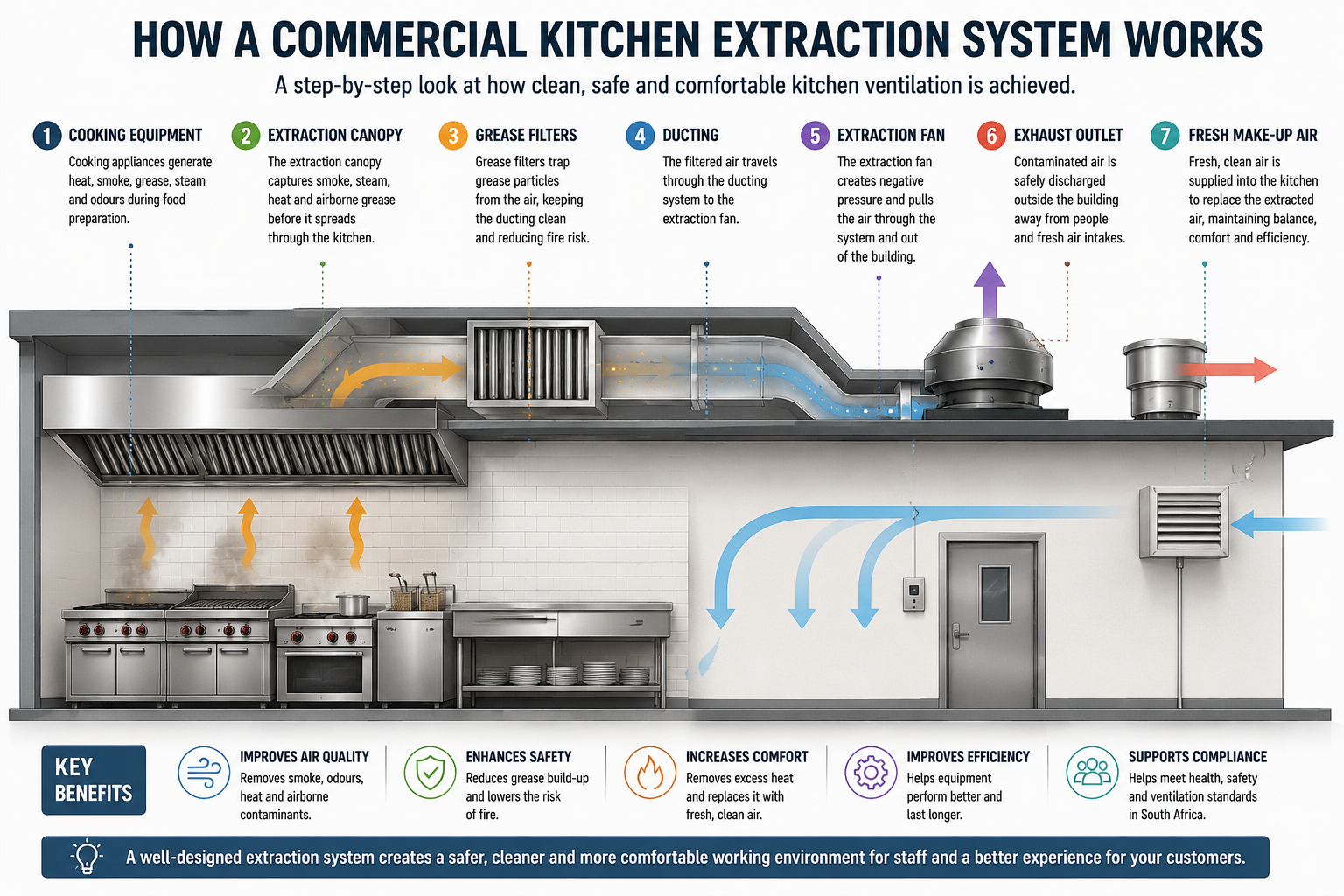
At a Glance: How an Extraction System Works
| Stage | Function |
|---|---|
| Extraction Canopy | Captures smoke, grease, heat and steam above cooking equipment |
| Grease Filters | Remove grease particles from the airflow |
| Ducting | Transports contaminated air through the building |
| Extraction Fan | Pulls contaminated air out of the kitchen |
| Exhaust Outlet | Safely discharges air outside |
| Make-Up Air System | Replaces extracted air with fresh, clean air |
Main Components of a Commercial Kitchen Extraction System
Every commercial kitchen extraction system consists of several interconnected components. Each one plays an important role in maintaining safe and efficient ventilation.
1. Extraction Canopy
The extraction canopy is the most visible part of the system and is installed directly above cooking equipment.
Its purpose is to capture:
- Smoke
- Steam
- Heat
- Grease vapours
- Cooking fumes
- Airborne particles
Commercial canopies are usually manufactured from high-grade stainless steel because it is durable, hygienic, corrosion-resistant, and easy to clean.
The size of the canopy should match both the cooking equipment beneath it and the kitchen’s extraction requirements.
2. Grease Filters
Grease filters prevent grease from entering the ductwork.
Most commercial kitchens use:
- Baffle filters
- Stainless steel grease filters
- High-efficiency grease extraction filters
Well-maintained filters improve airflow, reduce fire hazards, and simplify cleaning.
Tip: Grease filters should be cleaned regularly according to the cooking volume of the kitchen.
3. Ducting System
Ductwork transports contaminated air from the extraction canopy to the exhaust outlet.
Good duct design should:
- Maintain smooth airflow
- Minimise pressure losses
- Reduce grease accumulation
- Be easy to inspect and clean
- Comply with fire safety standards
Sharp bends and unnecessary duct length should be avoided wherever possible.
4. Commercial Extraction Fan
The extraction fan generates the airflow that powers the entire system.
Depending on the application, different fan types may be used, including:
- Centrifugal fans
- Axial fans
- Roof-mounted fans
- Inline extraction fans
Choosing the correct fan depends on:
- Kitchen size
- Cooking equipment
- Airflow requirements
- Duct length
- Noise considerations
5. Fresh Air (Make-Up Air) Unit
A make-up air system introduces filtered outdoor air into the kitchen to replace the air removed by the extraction system.
Benefits include:
- Improved staff comfort
- Better cooking performance
- Balanced air pressure
- Reduced energy waste
- More efficient ventilation
Modern commercial kitchens increasingly incorporate dedicated make-up air systems as part of their overall ventilation design.
6. Exhaust Outlet
After passing through the extraction system, the contaminated air is discharged safely outside the building.
The exhaust outlet should be positioned to minimise the impact of cooking odours on neighbouring properties and to prevent exhausted air from re-entering the building.
Proper placement is an important part of system design.
Types of Commercial Kitchen Extraction Systems
Not every commercial kitchen has the same layout or cooking requirements. The most effective extraction system depends on the kitchen design, cooking methods, and available space.
Below are the most common types.
Wall-Mounted Extraction Canopies
Wall-mounted canopies are installed against a wall with cooking equipment positioned directly underneath.
They are ideal for:
- Restaurants
- Fast-food outlets
- Cafés
- Hotels
- School kitchens
- Bakery production areas
Advantages
- Cost-effective
- Easier to install
- Excellent smoke capture
- Suitable for most kitchen layouts
- Simple maintenance
Island Extraction Canopies
Island canopies are suspended from the ceiling and are designed for cooking equipment located in the centre of the kitchen.
These are common in:
- Open-plan kitchens
- Hotel kitchens
- Culinary schools
- Premium restaurants
- Demonstration kitchens
Advantages
- Extracts from all sides
- Supports open kitchen layouts
- Attractive appearance
- Excellent airflow when correctly designed
Condensate Canopies
Condensate canopies are designed for equipment that mainly produces steam rather than grease.
Typical applications include:
- Commercial dishwashers
- Combination ovens
- Steamers
- Pasta cookers
These systems focus on moisture removal rather than grease extraction.
Low-Level Extraction Systems
Certain specialist cooking equipment produces smoke close to the cooking surface rather than allowing it to rise naturally.
Low-level extraction systems are often used with:
- Chargrills
- Specialist barbecue equipment
- Some induction cooking applications
These systems capture smoke at its source before it spreads.
Wall-Mounted vs Island Extraction Canopies
| Feature | Wall-Mounted Canopy | Island Canopy |
|---|---|---|
| Installation | Against a wall | Suspended from the ceiling |
| Cost | Lower | Higher |
| Installation Complexity | Easier | More complex |
| Airflow Requirements | Moderate | Higher |
| Best For | Most commercial kitchens | Open-plan kitchens |
| Maintenance | Easier | Slightly more involved |
| Visual Appeal | Practical | Premium, modern look |
Which Should You Choose?
If your cooking equipment is arranged along a wall, a wall-mounted canopy is generally the most practical and cost-effective choice. For kitchens with central cooking islands or open layouts where presentation matters, an island canopy can provide excellent performance while enhancing the overall aesthetic.
Expert Tip from Wedoall
An extraction system should never be selected based on price alone. The best solution is one that is properly designed for your kitchen’s cooking equipment, ceiling height, menu, and expected cooking volume. An undersized or poorly designed system can lead to inadequate ventilation, higher maintenance costs, and premature equipment wear.
At Wedoall, we recommend a site assessment and customised system design to ensure your extraction system delivers reliable performance, energy efficiency, and long-term value.
How to Choose the Right Commercial Kitchen Extraction System
Selecting the right commercial kitchen extraction system is about more than choosing a canopy and an extractor fan. Every kitchen has unique ventilation requirements based on the type of food being prepared, the cooking equipment in use, the layout of the building, and the expected cooking volume.
A well-designed extraction system should efficiently remove smoke, grease, steam, heat, and odours while maintaining balanced airflow throughout the kitchen. Choosing a system that is too small can result in poor ventilation, while an oversized system may consume unnecessary energy and increase operating costs.
Below are the key factors to consider when choosing the right extraction system for your business.
1. Consider the Type of Cooking Equipment
The amount of smoke, grease, and heat produced depends largely on the equipment being used.
For example:
| Cooking Equipment | Extraction Requirement |
|---|---|
| Deep Fryers | High |
| Chargrills | Very High |
| Gas Grills | Very High |
| Wok Burners | Extremely High |
| Pizza Ovens | Moderate to High |
| Combi Ovens | Moderate |
| Steamers | Low to Moderate |
| Dishwashers | Moisture Extraction |
Kitchens using open-flame equipment or high-temperature cooking methods generally require more powerful extraction systems than those preparing lighter meals.
2. Evaluate Your Kitchen Layout
The layout of your kitchen plays a major role in determining the most suitable extraction system.
Ask yourself:
- Is the cooking line positioned against a wall?
- Is it located in the centre of the kitchen?
- How high is the ceiling?
- Where can ducting be routed?
- Is there enough space for maintenance access?
These factors influence canopy selection, fan placement, duct routing, and overall system efficiency.
3. Calculate Airflow Requirements
One of the most important aspects of system design is determining the correct airflow capacity.
This is usually measured in:
- Cubic metres per hour (m³/h)
- Cubic feet per minute (CFM)
- Litres per second (L/s)
The required airflow depends on several variables, including:
- Kitchen size
- Heat load
- Type of cooking
- Canopy dimensions
- Number of appliances
- Length of ducting
- Building design
Because every kitchen is different, airflow calculations should be carried out by experienced professionals to ensure the system performs efficiently and meets operational requirements.
4. Choose the Right Canopy Size
The extraction canopy should fully cover the cooking equipment beneath it.
As a general guideline, the canopy should extend beyond the edges of the cooking equipment to help capture rising smoke, steam, and grease before it spreads throughout the kitchen.
A canopy that is too small may allow contaminants to escape, reducing the effectiveness of the extraction system.
5. Think About Future Expansion
Many restaurants expand their menu or add new cooking equipment as the business grows.
When designing an extraction system, consider future needs by allowing room for additional appliances where practical. Planning ahead can reduce the need for costly upgrades later.
6. Prioritise Energy Efficiency
Modern extraction systems are designed to improve energy efficiency without compromising performance.
Features such as variable-speed fans, efficient airflow design, and balanced make-up air systems can help reduce electricity consumption while maintaining a comfortable working environment.
An energy-efficient system can also contribute to lower long-term operating costs.
Understanding Extraction Capacity and Airflow
One of the most common questions business owners ask is:
“How powerful should my extraction system be?”
The answer depends on the amount of contaminated air that needs to be removed from the kitchen.
The larger the kitchen and the heavier the cooking, the greater the airflow required.
For example:
| Kitchen Type | Typical Extraction Demand |
|---|---|
| Coffee Shop | Low |
| Bakery | Moderate |
| Café | Moderate |
| Fast Food Outlet | High |
| Steakhouse | High |
| Restaurant with Fryers | High |
| Hotel Kitchen | Very High |
| Butchery Processing Area | Moderate |
| Industrial Food Production | Very High |
Rather than focusing solely on fan size, a professional system design considers the entire airflow path—from the canopy to the exhaust outlet—to ensure balanced and efficient ventilation.
Why Make-Up Air Is Just as Important as Extraction
Many business owners focus only on removing hot, contaminated air, but forget that every litre of air extracted from the kitchen must be replaced.
This replacement air is known as make-up air.
Without it, the kitchen can experience negative air pressure, leading to several problems.
Common Problems Caused by Poor Make-Up Air
- Doors become difficult to open or close.
- Smoke may linger in the kitchen instead of being extracted.
- Gas appliances may not perform efficiently.
- Staff experience uncomfortable working conditions.
- Air conditioning systems become less effective.
- Extraction fans work harder than necessary, increasing energy use.
A properly balanced make-up air system supplies clean, filtered outdoor air to replace the air removed by the extraction system. This improves comfort, supports efficient operation, and helps maintain a healthier kitchen environment.
Fire Safety and Grease Management
One of the greatest hazards in any commercial kitchen is the accumulation of grease.
During cooking, microscopic grease particles become airborne and are carried through the extraction system. Over time, these particles settle on filters, ductwork, fans, and canopies.
If grease is allowed to build up, it can:
- Restrict airflow
- Reduce extraction efficiency
- Increase cleaning costs
- Create unpleasant odours
- Increase the risk of fire
Regular cleaning and maintenance are essential to help minimise these risks.
Good Grease Management Includes:
- Cleaning grease filters regularly.
- Inspecting ductwork for grease build-up.
- Servicing extraction fans according to manufacturer recommendations.
- Scheduling professional deep cleaning of the entire extraction system.
- Replacing worn or damaged filters promptly.
Maintaining a clean extraction system not only improves safety but also helps ensure consistent performance and can extend the lifespan of the equipment.
Common Mistakes When Installing an Extraction System
Installing an extraction system is a specialist task. Mistakes made during the design or installation stage can reduce performance and lead to expensive modifications later.
Here are some of the most common mistakes to avoid:
1. Choosing an Undersized System
A system that cannot cope with the volume of smoke, heat, or grease generated by the kitchen will struggle to maintain good air quality.
2. Oversizing the Fan
A fan that is too powerful can create excessive noise, waste electricity, and disturb the balance of the ventilation system.
3. Poor Ductwork Design
Long duct runs, unnecessary bends, and undersized ducting increase airflow resistance and reduce extraction efficiency.
4. Ignoring Make-Up Air
Removing large volumes of air without providing replacement air can lead to poor ventilation and uncomfortable working conditions.
5. Incorrect Canopy Placement
If the canopy is too small or positioned incorrectly, smoke and grease may escape into the kitchen before they can be captured.
6. Neglecting Maintenance Access
Extraction systems require routine cleaning and servicing. Designing the system without adequate access panels or clearance can make maintenance difficult and more expensive.
7. Selecting Price Over Performance
While budget is always a consideration, choosing the cheapest option may result in higher operating costs, reduced efficiency, and a shorter system lifespan.
Investing in a well-designed, high-quality extraction system can deliver better performance and lower maintenance costs over time.
Wedoall Expert Advice
Every commercial kitchen is unique. A small coffee shop has very different ventilation requirements from a busy hotel kitchen or a high-volume takeaway.
At Wedoall, we recommend assessing your kitchen layout, cooking equipment, and operational needs before selecting an extraction system. A tailored solution helps ensure efficient airflow, improved staff comfort, and reliable long-term performance.
Industries That Require Commercial Kitchen Extraction Systems
Commercial kitchen extraction systems are essential wherever food is prepared on a large scale. Different industries have unique ventilation needs depending on the type of cooking, kitchen layout, and daily production volume.
Below are some of the most common industries that benefit from professionally designed extraction systems.
Restaurants
Restaurants often operate multiple cooking appliances simultaneously, including grills, fryers, ovens, and gas ranges. These generate significant amounts of heat, grease, smoke, and cooking odours.
A properly designed extraction system helps maintain a comfortable working environment, improves air quality, and supports efficient kitchen operations during busy service periods.
Hotels
Hotel kitchens typically serve breakfast, lunch, dinner, room service, and event catering from the same facility. This continuous operation requires a reliable extraction system capable of handling varying cooking loads throughout the day.
Fast Food Outlets
Fast food kitchens rely heavily on deep fryers, flat-top grills, and high-speed cooking equipment that produce substantial amounts of grease and heat.
Efficient extraction helps improve staff comfort while reducing grease accumulation throughout the kitchen.
Bakeries
Although bakeries generally produce less grease than restaurants, they generate considerable heat and steam from deck ovens, convection ovens, and proofing equipment.
Proper ventilation helps regulate kitchen temperatures and improve working conditions.
Butcheries
Commercial butcheries often require extraction systems in food preparation areas, smokehouses, and processing rooms where heat, smoke, and airborne particles are generated.
Supermarket Delis
Supermarket deli departments frequently prepare rotisserie chicken, fried foods, hot meals, and baked products throughout the day.
Extraction systems help maintain a pleasant shopping environment while improving ventilation in food preparation areas.
Schools, Universities and Hospitals
Institutional kitchens prepare large volumes of meals daily. Reliable extraction systems help create safer and more comfortable working environments while supporting consistent food production.
Cloud Kitchens and Ghost Kitchens
The rapid growth of food delivery services has increased demand for cloud kitchens. These facilities often operate multiple cooking stations within a compact space, making effective extraction and ventilation essential for maintaining air quality and efficient operations.
Commercial Kitchen Extraction Systems in South Africa: Best Practices
Whether you’re opening a new commercial kitchen or upgrading an existing one, following recognised best practices can improve system performance, safety, and longevity.
Plan Ventilation Early
Extraction systems should be considered during the kitchen design phase rather than after equipment has been installed. Early planning allows for better duct routing, canopy placement, and maintenance access.
Match the System to the Cooking Equipment
The ventilation requirements of a bakery differ significantly from those of a steakhouse or fast-food restaurant. Selecting the right system for your cooking methods helps ensure effective extraction and long-term efficiency.
Choose Quality Materials
Commercial extraction systems are typically manufactured from stainless steel because it offers excellent durability, corrosion resistance, and ease of cleaning.
Investing in quality materials can reduce maintenance requirements and extend the lifespan of the system.
Prioritise Professional Installation
Correct installation is just as important as choosing the right equipment. A professionally installed system is more likely to deliver balanced airflow, efficient performance, and easier maintenance.
Schedule Routine Maintenance
Regular inspection and cleaning help maintain extraction efficiency, reduce grease build-up, and prolong the life of the equipment.
Preventative maintenance is generally more cost-effective than emergency repairs.
Commercial Kitchen Extraction System Maintenance Checklist
Like any commercial equipment, an extraction system performs best when it is properly maintained.
Use the checklist below as part of your routine maintenance programme.
| Maintenance Task | Recommended Frequency |
|---|---|
| Clean grease filters | Daily or weekly, depending on usage |
| Wipe down extraction canopy | Daily |
| Inspect ductwork | Monthly |
| Check extraction fan operation | Monthly |
| Inspect electrical components | Quarterly |
| Professional system inspection | Every 6–12 months |
| Deep clean ducting and extraction system | As required based on cooking volume and grease accumulation |
Tip: The ideal maintenance schedule depends on the type of cooking and the intensity of kitchen operations. High-volume kitchens may require more frequent inspections and cleaning than low-volume facilities.
Signs It’s Time to Upgrade Your Extraction System
An ageing or undersized extraction system can affect kitchen efficiency, staff comfort, and operating costs.
Here are some common signs that it may be time to consider an upgrade:
- Persistent smoke remains in the kitchen during cooking.
- Excessive heat makes the kitchen uncomfortable.
- Strong cooking odours spread into customer areas.
- Grease accumulates quickly on walls, ceilings, or equipment.
- The extraction fan has become unusually noisy.
- Staff report poor air quality or discomfort.
- Rising maintenance and repair costs.
- The system struggles to cope with increased cooking demand.
- You are expanding or remodelling your commercial kitchen.
If you notice one or more of these issues, a professional assessment can help determine whether your existing system needs maintenance, modification, or replacement.
Frequently Asked Questions
What is a commercial kitchen extraction system?
A commercial kitchen extraction system is a ventilation solution designed to remove smoke, grease, heat, steam, and cooking odours from commercial food preparation areas.
Why is an extraction system important?
It helps improve air quality, enhances staff comfort, reduces grease build-up, supports safer kitchen operations, and creates a more pleasant environment for employees and customers.
How often should grease filters be cleaned?
Cleaning frequency depends on cooking volume and the type of food prepared. High-volume kitchens generally require more frequent cleaning than lower-volume operations.
What is make-up air?
Make-up air is fresh, filtered air introduced into the kitchen to replace the air removed by the extraction system, helping maintain balanced airflow and comfortable working conditions.
Can one extraction system serve multiple cooking stations?
Yes, provided it is correctly designed and sized to accommodate the total cooking load and kitchen layout.
How long does a commercial extraction system last?
With proper installation, routine maintenance, and regular servicing, a quality extraction system can provide many years of reliable operation. The exact lifespan depends on usage, environmental conditions, and maintenance practices.
Can an existing extraction system be upgraded?
In many cases, yes. Existing systems can often be modified by upgrading components such as fans, filters, canopies, or ductwork to improve performance and meet changing operational needs.
Does every commercial kitchen need an extraction system?
Most commercial kitchens benefit from an appropriately designed extraction system, particularly where cooking generates heat, grease, smoke, or steam. The specific requirements will depend on the cooking processes and applicable regulations.
Why Choose Wedoall for Commercial Kitchen Extraction Systems?
Choosing the right supplier is just as important as choosing the right extraction system. At Wedoall, we understand that every commercial kitchen is unique, which is why we focus on providing solutions tailored to your operational needs rather than one-size-fits-all products.
Our team works with businesses across South Africa, supplying high-quality commercial catering equipment and ventilation solutions for restaurants, hotels, bakeries, butcheries, supermarkets, schools, hospitals, and many other food service operations.
When you choose Wedoall, you benefit from:
- High-quality commercial kitchen extraction solutions
- Durable stainless steel construction
- Systems designed for long-term performance
- Expert guidance on selecting the right solution
- Competitive pricing
- Nationwide supply across South Africa
- Ongoing customer support
Whether you’re building a new kitchen, expanding your business, or replacing an existing system, Wedoall is committed to helping you create a safer, cleaner, and more efficient commercial kitchen.
Conclusion
A commercial kitchen extraction system is far more than a ventilation accessory—it’s a fundamental part of a safe, productive, and efficient food service operation. By removing heat, grease, smoke, steam, and cooking odours, a well-designed system helps protect staff, improve comfort, preserve equipment, and support smoother day-to-day operations.
Whether you manage a restaurant, bakery, hotel, butchery, café, supermarket deli, or institutional kitchen, investing in the right extraction system can deliver lasting value through improved performance, easier maintenance, and a better working environment.
If you’re planning a new commercial kitchen or upgrading an existing one, taking the time to choose the right extraction solution today can help your business operate more efficiently for years to come.
Ready to Upgrade Your Commercial Kitchen Ventilation?
At Wedoall, we supply commercial kitchen extraction systems designed to meet the demands of South African businesses. From expert advice and system design to high-quality equipment, we’re here to help you find the right solution for your kitchen.
📞 Contact us today for a free consultation or request a quote and let our team help you create a cleaner, safer, and more efficient commercial kitchen.
